
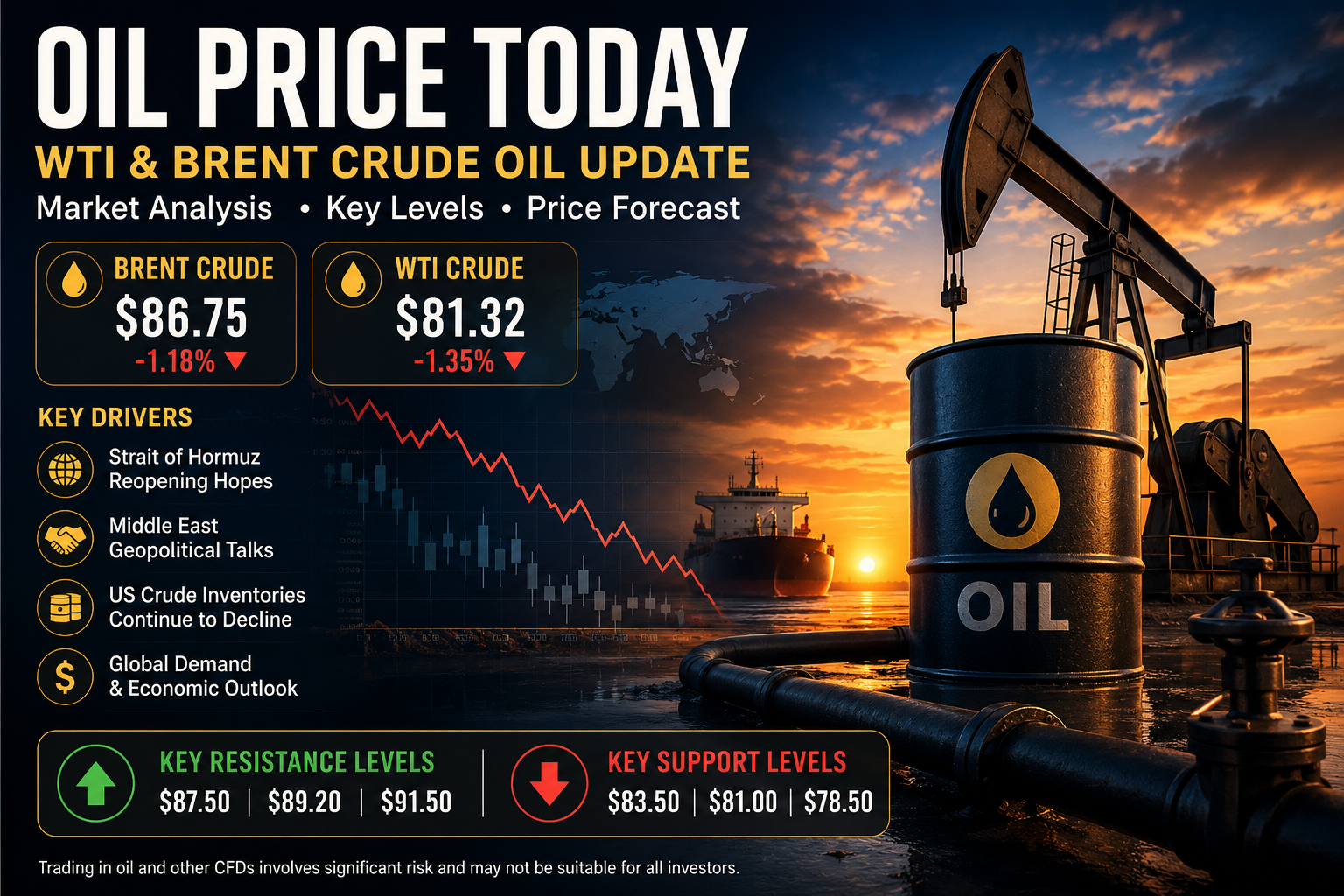
Oil Price Today, August 27, 2026: Crude oil prices remain volatile as traders assess developments in the Middle East and growing hopes that the Strait of Hormuz could gradually reopen. Brent crude recently traded around the mid-$80s per barrel, while WTI remained around the low-$80s area.
The latest move in oil markets comes after several sessions of declines, with investors increasingly focused on diplomatic efforts involving Iran, Oman and Qatar that could reduce concerns about global oil supply disruptions.
Oil Price Today: What Is Happening in the Crude Oil Market?
Crude oil prices have come under pressure as traders price in the possibility of improved shipping conditions through the Strait of Hormuz.
Brent crude and WTI have both experienced significant volatility in recent sessions. The market is balancing two competing forces: the risk of continued supply disruption in the Middle East and the possibility that diplomatic progress could restore more normal oil flows.
For traders, this makes WTI crude oil and Brent crude oil important markets to watch over the coming sessions.
Why Is Oil Falling Today?
1. Strait of Hormuz Reopening Hopes
The biggest factor currently influencing oil prices today is the possibility of reopening the Strait of Hormuz.
The waterway is one of the world’s most important oil-shipping routes. Any improvement in shipping conditions could reduce the supply-risk premium that has been incorporated into crude prices.
Recent diplomatic discussions involving Iran and Oman have increased hopes of a temporary framework that could allow shipping activity to improve.
2. Middle East Geopolitical Risk
Geopolitical developments remain a major source of volatility.
If tensions escalate or shipping through the Strait of Hormuz remains restricted, oil prices could quickly regain some of their recent risk premium.
On the other hand, a credible de-escalation could encourage traders to price in greater supply availability, potentially keeping downward pressure on crude.
3. U.S. Crude Inventories
U.S. inventory data is another important driver for the oil market.
Recent EIA data showed U.S. crude inventories continued to decline, while Strategic Petroleum Reserve stocks also fell. These developments can provide underlying support to oil even when geopolitical risk premiums are declining.
Brent Crude Oil Price Outlook
Brent crude remains highly sensitive to developments surrounding global supply.
Recent market reports placed Brent around the $86–$88 per barrel region, although prices can change rapidly during periods of geopolitical uncertainty.
The short-term outlook will likely depend on whether the market receives confirmation of improving shipping conditions.
Bullish Scenario for Brent
A bullish move could develop if:
- Strait of Hormuz negotiations break down
- Oil shipments remain disrupted
- Middle East tensions escalate
- Supply concerns increase
- Global inventories continue declining
Under this scenario, traders could see renewed demand for crude as a geopolitical-risk hedge.
Bearish Scenario for Brent
Oil could remain under pressure if:
- The Strait of Hormuz gradually reopens
- Middle East tensions ease
- Supply disruptions decline
- Global crude availability improves
- Traders continue reducing geopolitical risk premiums
The market could then focus more heavily on inventories, global demand and economic growth.
WTI Crude Oil Forecast
WTI crude oil is also trading in a highly volatile environment.
Recent reports showed WTI moving around the $80–$82 per barrel area, although intraday prices have been fluctuating considerably.
For short-term traders, geopolitical headlines can cause sharp price movements, making technical levels and risk management particularly important.
What to Watch in Oil Trading Today
Traders following oil prices today should monitor:
- Strait of Hormuz developments
- Iran-Oman negotiations
- Middle East geopolitical news
- Brent crude price
- WTI crude price
- U.S. crude inventories
- OPEC+ developments
- Global oil demand forecasts
- U.S. dollar movements
- Global economic growth expectations
These factors can quickly change the direction of crude oil markets.
Oil Price Forecast: What Comes Next?
The short-term oil price forecast remains highly dependent on geopolitical developments.
If the Strait of Hormuz gradually returns to normal operations, the reduction in supply-risk premiums could keep crude prices under pressure. Conversely, any renewed disruption could trigger a rapid rebound.
This means traders should be prepared for elevated volatility rather than assuming that the current downward move will continue uninterrupted.
From a fundamental perspective, the market is currently transitioning between two narratives: supply disruption risk versus potential normalization of global oil flows.
Is Oil Bullish or Bearish Today?
The short-term oil market currently has a mixed-to-bearish bias, primarily because expectations of improved shipping conditions are reducing immediate supply fears.
However, the outlook can change quickly. A fresh geopolitical escalation could reverse the current trend and push crude prices higher.
For traders, confirmation from both fundamental developments and technical price action is important before making directional decisions.
Frequently Asked Questions
What is the oil price today?
Brent crude has recently traded around the mid-$80s per barrel, while WTI has traded around the low-$80s. Prices remain highly volatile and can change throughout the trading session.
Why is crude oil falling today?
Oil prices have been pressured by increasing optimism that diplomatic efforts could improve conditions around the Strait of Hormuz and reduce global supply-disruption risks.
What is the oil price forecast for 2026?
The 2026 oil outlook depends heavily on Middle East developments, global demand, inventories, OPEC+ policy and the availability of crude supplies. Traders should expect continued volatility.
What is the difference between Brent and WTI?
Brent crude is the primary international oil benchmark, while West Texas Intermediate (WTI) is a major U.S. crude benchmark. Both are widely used by traders and financial markets.
Will oil prices rise again?
Oil could rebound if geopolitical tensions intensify or supply disruptions worsen. Conversely, successful diplomatic efforts and improved shipping conditions could keep prices under pressure.
Final Thoughts
Crude oil prices today remain dominated by geopolitical developments and expectations surrounding the Strait of Hormuz.
The recent decline reflects growing hopes that supply disruptions could ease, but the market remains vulnerable to sudden price reversals. Traders should closely monitor Middle East headlines, inventory data and technical price action before taking positions.
Follow TronexTrade.com for the latest oil price news, crude oil analysis, WTI forecast, Brent forecast, forex updates and financial market insights.
Disclaimer: This article is for educational and informational purposes only and does not constitute financial or investment advice. Trading crude oil, CFDs, forex and other leveraged products involves significant risk. Always conduct your own research and use appropriate risk management.
 Tags:
Tags: